
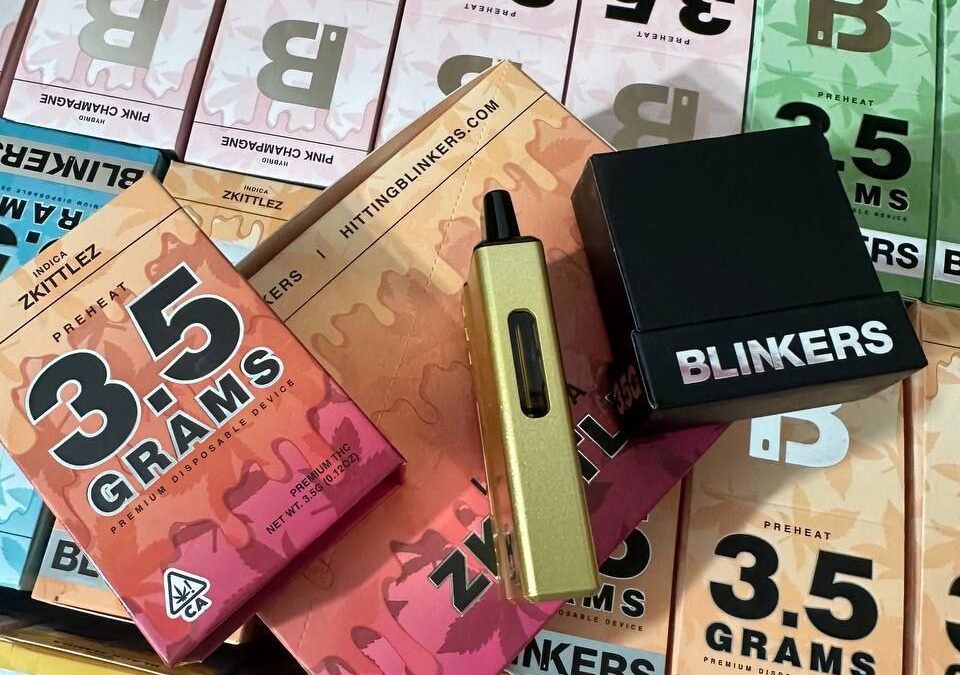
How to Spot Fake Blinkers Products: A Consumer Guide to Product Authenticity
As the popularity of recognizable vape brands grows, counterfeit products can become a concern for consumers. Products that appear to be genuine may sometimes be sold through unauthorized or unreliable sources, making it difficult to determine whether the item is authentic simply by looking at the packaging.
For anyone researching Blinkers, understanding the difference between legitimate product information and potentially misleading or counterfeit products is important. Packaging can be copied, product images can be reused, and online listings can contain inaccurate information. This means consumers should look at several factors rather than relying on one visual detail. This guide explains what to look for when evaluating the authenticity of a Blinkers product, how to identify potential warning signs, and what to do when something about a product does not appear right.
Why Blinkers Product Authenticity Matters
Authenticity matters because consumers generally expect a genuine branded product to be manufactured and labeled according to the brand’s specifications. A counterfeit product may not have the same manufacturing controls, labeling standards, or quality assurance.
This is particularly important with products intended for inhalation. Consumers cannot reliably determine the ingredients or manufacturing conditions of an inhalable product simply by examining its exterior. Even if counterfeit packaging looks convincing, the contents may not necessarily correspond to what is represented on the label. For that reason, checking authenticity is not simply about getting the “real” version of a particular brand. It is also about knowing what product you are actually dealing with and reducing the possibility of purchasing something inaccurately represented.
How to Identify Potentially Fake Blinkers Products
There is no universal visual test that can guarantee whether a Blinkers product is authentic. Counterfeit packaging can sometimes be sophisticated, and genuine packaging can also change over time. Instead, consumers should look at the entire product and purchasing context. Consider the packaging, labeling, seller, product information, price, and any available verification method together. If several elements appear unusual at the same time, it is reasonable to investigate further before assuming the product is genuine.
Examine the Packaging Carefully
Packaging is one of the first things consumers can inspect. Genuine branded packaging is generally produced with consistent printing, labeling, and design standards. A product that has obvious spelling errors, blurry printing, poorly aligned graphics, inconsistent fonts, or unusually low-quality packaging deserves additional attention. However, a packaging difference does not automatically mean that a product is fake. Brands can introduce redesigned packaging, change labels, or produce different versions for different markets. An older package can therefore look different from a newer one while still being legitimate. The important point is to look for multiple inconsistencies rather than treating one minor design difference as proof of counterfeiting.
Pay Attention to Product Labels
Product labeling can provide useful information when evaluating an item. Look at the product name, capacity information, labeling, manufacturer information, and other details provided on the package. The information should appear professionally presented and should not contradict itself. For example, if the product name on one part of the package differs from the name elsewhere, or if important information appears incomplete or unusually formatted, that may be a reason to investigate further. Consumers should also be cautious about relying on labels alone. A counterfeit manufacturer can reproduce a label, so labeling is one part of an authenticity assessment rather than definitive proof.
Compare the Product With Reliable Information
Another useful approach is to compare the product with information from reliable sources. Look for official product descriptions, manufacturer information, packaging references, or other trustworthy documentation. Compare major details such as the product name, design, capacity, and labeling. It is important not to assume that every image found online represents the current product. Retailer photographs, social-media posts, and older product listings can remain online long after packaging or product designs have changed. The goal is to identify significant inconsistencies, not simply to find a photograph that looks slightly different.
Check Where the Product Came From
The seller can be just as important as the product itself. A seller with clear business information, consistent contact details, transparent policies, and a verifiable online presence provides consumers with more information to evaluate than an anonymous seller offering limited details. This does not mean that every unfamiliar seller is selling counterfeit products. A smaller retailer may be legitimate. However, consumers should be more cautious when a seller provides little information about who operates the business or where the products originate. Before purchasing any branded product, it is worth asking whether the seller provides enough information for you to understand who you are dealing with.
Be Careful With Extremely Low Prices
Price can sometimes provide a useful warning sign, although it is never definitive proof of authenticity. Legitimate businesses may offer discounts, clearance sales, or promotional pricing. Therefore, a lower price does not automatically mean that a product is counterfeit. The concern arises when a product is being offered at a price that seems dramatically inconsistent with other legitimate listings, particularly when the unusually low price is combined with poor packaging, limited seller information, or other warning signs. Instead of asking whether a low price automatically means “fake,” consider the entire situation. An unusually low price should encourage additional research.
Real Blinkers vs Potentially Fake Blinkers
When comparing a product that you believe may be counterfeit with a legitimate product, look for broad consistency rather than one specific feature. A genuine product should generally have coherent product information, professional packaging, and details that correspond with reliable information about the product. A suspicious product may show several inconsistencies at once. The packaging might contain unusual typography, the labeling might look poorly produced, and the seller might provide little information about where the product came from.
Packaging Differences
Packaging differences are among the easiest things to notice, but they can also be among the easiest things to misinterpret. A different color, logo placement, or package design does not automatically establish that a product is counterfeit. Product packaging can change over time. Instead, look for obvious quality problems or combinations of inconsistencies. Misspellings, blurry printing, strange formatting, missing information, and inconsistent product descriptions are more meaningful when they appear together.
Product Information Differences
Product information should make sense as a whole. If the capacity, product name, labeling, or other specifications conflict with one another, investigate the discrepancy. Compare the information against reliable sources rather than relying solely on the seller’s description. If the product information cannot be verified, that uncertainty itself is a reason to be cautious.
Unusual Product Quality
Physical quality can sometimes provide another clue. Poorly finished components, damaged packaging, loose parts, unusual construction, or obvious manufacturing defects may indicate that something is wrong. However, consumers should not attempt to determine the contents of an inhalable product by smell, appearance, taste, or other informal methods. These methods cannot reliably establish what is inside the product.
Common Warning Signs of Counterfeit Products
Counterfeit products do not always have one obvious giveaway. More often, several small warning signs appear together. A suspicious listing might use poor-quality product photographs, provide very little information about the seller, offer an unusually low price, and show packaging that does not appear consistent with reliable product references. Another warning sign can be exaggerated or unsupported claims. Consumers should be cautious when a seller makes claims that cannot be verified through reliable product information. The more inconsistencies you encounter, the more important it becomes to verify the product before assuming it is genuine.
How to Verify Blinkers Product Information
The most reliable approach is to use information provided directly by the manufacturer or another authoritative source whenever possible. If an official authenticity or verification system is available for a particular product, that should generally take priority over informal methods. A verification system provided by the brand is more useful than attempting to identify authenticity through photographs alone.
When researching a product online, pay attention to the source of the information. An official brand resource, established business, or documented product source is generally more useful than an anonymous social-media post. It is also worth remembering that information found online can become outdated. Product designs, packaging, and product lines can change, so older photographs should not automatically be treated as the definitive reference.
What to Do If You Suspect a Blinkers Product Is Fake
If several aspects of a product appear suspicious, do not simply assume that the product is authentic because the packaging looks convincing. Keep the original packaging and any purchase information you have. Receipts, order confirmations, seller details, product photographs, and other documentation can be useful if you need to investigate the product further.
If an official verification method is available, use it. You can also contact the relevant manufacturer or seller through a legitimate contact channel and ask for clarification. If you have concerns about the contents or safety of an inhalable product, avoid using it until you have been able to establish what the product actually is.
Why Buying From a Reliable Source Matters
The source of a product can make authenticity easier to evaluate. A reliable seller should provide enough information for consumers to understand who they are purchasing from. Clear business details, contact information, product descriptions, and transparent policies all make it easier to evaluate a seller.
A professional-looking website alone does not guarantee authenticity, however. Counterfeit sellers can also create convincing websites. Consider the complete picture, including the seller’s identity, product information, business presence, and any available verification options.
What should I do if I think my product is counterfeit?
Keep the packaging and purchase records, investigate the seller, and use any official verification process available. If you have concerns about the contents or safety of the product, avoid using it until the situation has been clarified.
Can I tell whether a vape product is authentic by its appearance?
Appearance can reveal potential warning signs, but it cannot reliably establish authenticity or determine what an inhalable product contains. Official verification and reliable product information are preferable.
Is an unusually cheap Blinkers product fake?
Not necessarily. Legitimate sellers can offer discounts and promotions. However, an unusually low price combined with other warning signs should encourage additional investigation.
Does different Blinkers packaging mean the product is fake?
Not necessarily. Brands can update packaging, and different production periods or markets may use different designs. A packaging difference should be investigated in context rather than treated as automatic proof of counterfeiting.
What are the most common signs of fake Blinkers products?
Potential warning signs include poor-quality printing, spelling errors, inconsistent labeling, missing product information, suspicious seller details, unusually low prices, and products that differ substantially from reliable references.
How can I tell if a Blinkers product is authentic?
There is no single visual feature that can guarantee authenticity. Examine the packaging, labeling, product information, seller, and available verification information together. If an official verification method exists, that is generally more reliable than judging the product by appearance alone.
Final Thoughts
Identifying counterfeit products is not always straightforward. Modern counterfeit packaging can sometimes look remarkably similar to genuine products, while legitimate products can also change their packaging over time.
For consumers researching Blinkers, the best approach is to consider multiple factors rather than relying on a single visual characteristic. Examine the packaging and labeling, investigate the seller, compare product information with reliable sources, and use an official verification system whenever one is available.
Most importantly, if something about a product does not seem right, do not ignore the warning signs. Taking the time to verify the product before using it can help consumers make more informed decisions.